> For the complete documentation index, see [llms.txt](https://docs.p0.dev/llms.txt). Markdown versions of documentation pages are available by appending `.md` to page URLs; this page is available as [Markdown](https://docs.p0.dev/integrations/resource-integrations/custom-resource/installing-a-custom-resource-integration.md).
# Installing a custom resource integration
The **Custom Resource** integration allows you to **securely manage access to external or on-premise applications** using **AWS Lambda** or **Google Cloud Run**. Whenever a user is granted or revoked access through P0, your service provider is automatically invoked, giving you full control over how access is provisioned or removed within your systems.
## Before you begin
Before you configure your **custom resource**, you'll need to set up a few prerequisites. This guide walks you through everything, but before diving into the steps, make sure you have an installed function invocation component for **AWS** or **Google Cloud**.\
\
[Function invocation](/integrations/resource-integrations/aws/function-invocation.md)
[Cloud Run invocation](/integrations/resource-integrations/google-cloud/cloud-run-invocation.md)
## Installing your custom resource
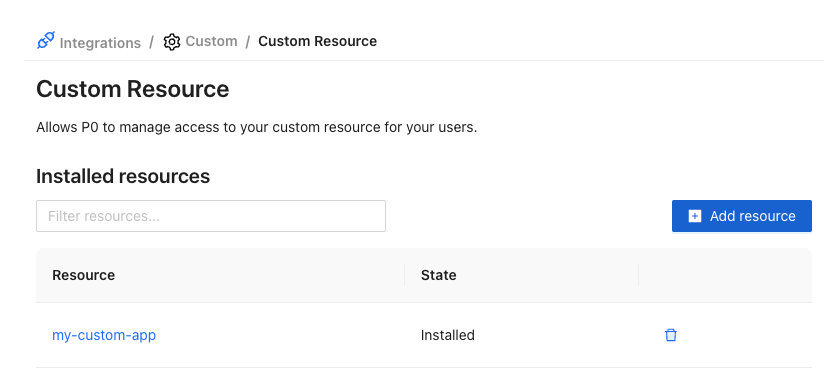
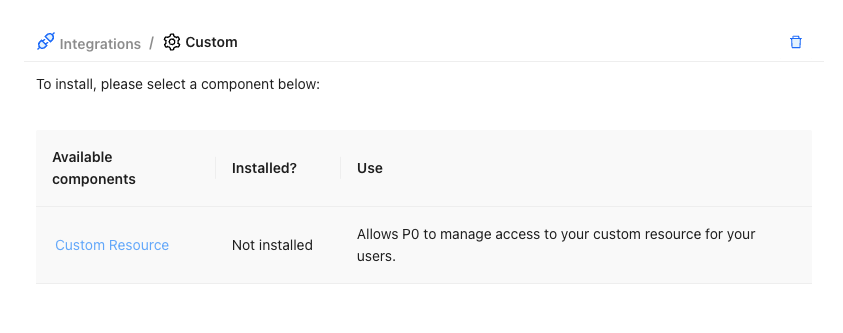
1. Go to p0.app in your browser, navigate to **Integrations**, and select **Custom** under the **Resources** section.
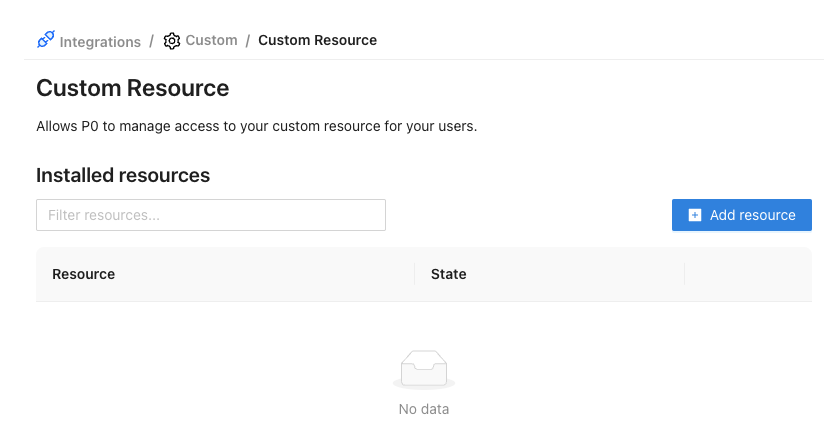
3. Click **“Add Resource”** to create a new Custom Resource.
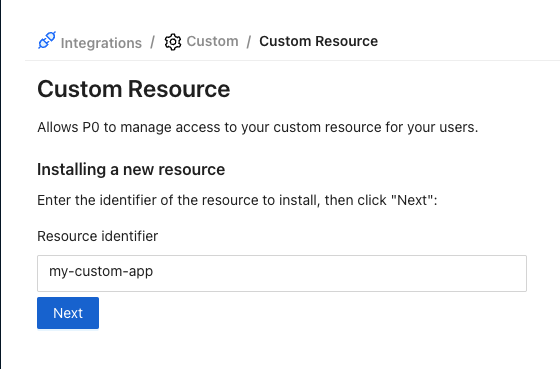
4. Provide a **globally unique ID** for this resource. This identifier is sent back in the payload to your Lambda and can be used to distinguish multiple resources.
{% hint style="warning" %}
You can't change this ID after installation. You must reinstall to update it.
{% endhint %}
5. Give your resource a **descriptive name** that appears to end users when they request access. Select **AWS** or **GCP** as your service provider.
6. Click **Continue** to complete the integration setup. Your function caller is now linked to the P0 Custom Resource.
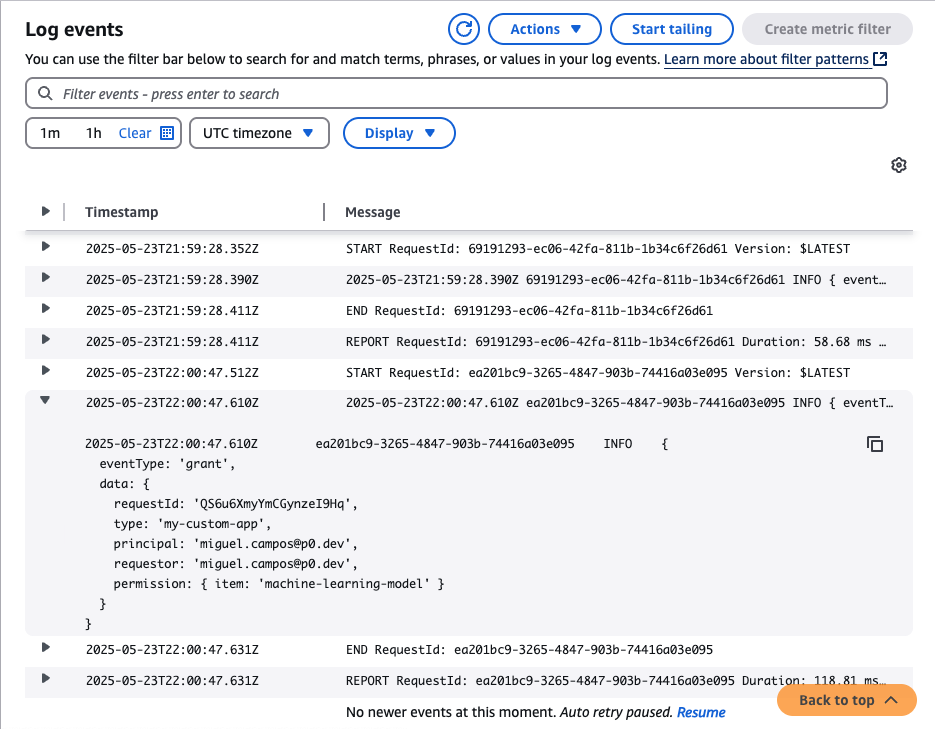
7. Make a test access request via any supported P0 interface (Web, Slack, or Microsoft Teams), as in [Requesting access](/access-management/access-management/just-in-time-access/requesting-access.md), to confirm your AWS Lambda is being triggered.
## Related links
[Custom resource](/integrations/resource-integrations/custom-resource.md)
.png?alt=media)