> For the complete documentation index, see [llms.txt](https://docs.p0.dev/llms.txt). Markdown versions of documentation pages are available by appending `.md` to page URLs; this page is available as [Markdown](https://docs.p0.dev/integrations/resource-integrations/kubernetes/advanced-requests.md).
# Advanced requests
How to request common Kubernetes access patterns with P0
This topic describes how to perform advanced Kubernetes cluster access requests using P0's Slack bot. It contains the following sections:
* [#prerequisites](#prerequisites "mention")
* [#request-admin-access-to-all-kubernetes-resources](#request-admin-access-to-all-kubernetes-resources "mention")
* [#request-elevated-access-for-port-forwarding-to-a-pod](#request-elevated-access-for-port-forwarding-to-a-pod "mention")
* [#request-elevated-access-for-a-shell-to-a-running-container](#request-elevated-access-for-a-shell-to-a-running-container "mention")
{% hint style="info" %}
Each section shows how to make a request using both the request modal and direct Slack commands.
{% endhint %}
## Prerequisites
Before continuing, ensure you're familiar with basic Kubernetes access requests. See [Requesting Kubernetes access](/integrations/resource-integrations/kubernetes/requesting-access.md) for more information.
## Request Admin Access to all Kubernetes Resources
The following steps show how to request admin access to all Kubernetes resources:
### Use the Request Modal
1. Send `/p0 request` as a Slack message in any direct message (DM) or Slack channel.
2. Configure the request modal fields and click **Request**:
* **Resource:** Select **Kubernetes**
* **Access type:** Select **Kubernetes resource**
* **Cluster:** Select your Kubernetes cluster name
* **Resource:** Leave as the default (**All Kinds / All namespaces / All resources**)\
\  * **Role:** Enter `admin` to display available roles and select **ClusterRole / admin** from the dropdown\
\
* **Role:** Enter `admin` to display available roles and select **ClusterRole / admin** from the dropdown\
\ 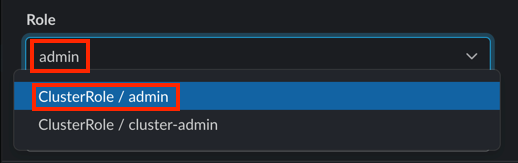 * **Reason:** Enter the reason for your access request
3. Wait for the approver to approve your request.
### Use the Command
Alternatively, specify the entire request via a command with the following arguments:
`/p0 request k8s resource --cluster {cluster ID} --role "ClusterRole / {role}" --reason {reason}`
For example:
`/p0 request k8s resource --cluster EKS-demo-cluster --role "ClusterRole / admin" --reason "Check cluster health"`
## Request Elevated Access for Port-Forwarding to a pod
[Port-forwarding](https://kubernetes.io/docs/tasks/access-application-cluster/port-forward-access-application-cluster/) with `kubectl port-forward` is a common operation that requires elevated access. Instead of requesting a general `edit` or `admin` role, you can use P0's curated port-forward role which contains the following rules:
````yaml
```
- apiGroups: [""]
resources: ["pods"]
verbs: ["get", "list", "watch"]
- apiGroups: [""]
resources: ["pods/portforward"]
verbs: ["get", "create"]
```
````
### Use the Request Modal
1. Send `/p0 request` as a Slack message in any DM or Slack channel.
2. Configure the request modal fields and click **Request**:
* **Resource:** Select **Kubernetes**
* **Access Type:** Select **Kubernetes resource**
* **Cluster:** Select your Kubernetes cluster name
* **Resource:** Enter pod to display the available pod resources, and select the pod you want to port forward from the dropdown\
\

* **Role:** Enter port and select **CuratedRole / port-forward** from the dropdown\

* **Reason:** Enter the reason for your access request
3. Wait for the approver to approve your request.
### Use the Command
Alternatively, specify the entire request via a command with the following arguments:
`/p0 request k8s resource --cluster {cluster ID} --locator {locator} --role "CuratedRole / {role}" --reason {reason}`
The following example allows port-forwarding to one nginx pod in the default namespace:
`/p0 request k8s resource --cluster EKS-demo-cluster --locator "Pod / default / nginx-deployment-cbdccf466-k9f89" --role "CuratedRole / port-forward" --reason "Debug API""`
## Request Elevated Access for a Shell to a Running Container
[Shell access to a running container](https://kubernetes.io/docs/tasks/debug/debug-application/get-shell-running-container/) with `kubectl exec` is an operation that requires elevated access. Instead of requesting a general `edit` or `admin` role you can use P0's curated `exec` role which contains the following rules:
````yaml
```
- apiGroups: [""]
resources: ["pods"]
verbs: ["get", "list", "watch"]
- apiGroups: [""]
resources: ["pods/exec"]
verbs: ["create"]
```
````
### Use the Request Modal
1. Send `/p0 request` as a Slack message in any DM or Slack channel.
2. Configure the request modal fields and click **Request**:
* **Resource:** Select **Kubernetes**
* **Access Type:** Select **Kubernetes resource**
* **Cluster:** Select your Kubernetes cluster name
* **Resource:** Enter `pod` to display the available pod resources, and select the pod you want to access from the dropdown\

* **Role:** Enter exe and select CuratedRole / exec from the dropdown\

* **Reason:** Enter the reason for your access request
3. Wait for the approver to approve your request.
### Use the Command
Alternatively, specify the entire request via a command with the following arguments:
`/p0 request k8s resource --cluster {cluster ID} --locator {locator} --role "CuratedRole / {role}" --reason {reason}`
The following example requests elevated access for one nginx pod in the `default` namespace:\
\
`/p0 request k8s resource --cluster EKS-demo-cluster --locator "Pod / default / nginx-deployment-cbdccf466-k9f89" --role "CuratedRole / exec" --reason "Debug environment variables"`
* **Reason:** Enter the reason for your access request
3. Wait for the approver to approve your request.
### Use the Command
Alternatively, specify the entire request via a command with the following arguments:
`/p0 request k8s resource --cluster {cluster ID} --role "ClusterRole / {role}" --reason {reason}`
For example:
`/p0 request k8s resource --cluster EKS-demo-cluster --role "ClusterRole / admin" --reason "Check cluster health"`
## Request Elevated Access for Port-Forwarding to a pod
[Port-forwarding](https://kubernetes.io/docs/tasks/access-application-cluster/port-forward-access-application-cluster/) with `kubectl port-forward` is a common operation that requires elevated access. Instead of requesting a general `edit` or `admin` role, you can use P0's curated port-forward role which contains the following rules:
````yaml
```
- apiGroups: [""]
resources: ["pods"]
verbs: ["get", "list", "watch"]
- apiGroups: [""]
resources: ["pods/portforward"]
verbs: ["get", "create"]
```
````
### Use the Request Modal
1. Send `/p0 request` as a Slack message in any DM or Slack channel.
2. Configure the request modal fields and click **Request**:
* **Resource:** Select **Kubernetes**
* **Access Type:** Select **Kubernetes resource**
* **Cluster:** Select your Kubernetes cluster name
* **Resource:** Enter pod to display the available pod resources, and select the pod you want to port forward from the dropdown\
\

* **Role:** Enter port and select **CuratedRole / port-forward** from the dropdown\

* **Reason:** Enter the reason for your access request
3. Wait for the approver to approve your request.
### Use the Command
Alternatively, specify the entire request via a command with the following arguments:
`/p0 request k8s resource --cluster {cluster ID} --locator {locator} --role "CuratedRole / {role}" --reason {reason}`
The following example allows port-forwarding to one nginx pod in the default namespace:
`/p0 request k8s resource --cluster EKS-demo-cluster --locator "Pod / default / nginx-deployment-cbdccf466-k9f89" --role "CuratedRole / port-forward" --reason "Debug API""`
## Request Elevated Access for a Shell to a Running Container
[Shell access to a running container](https://kubernetes.io/docs/tasks/debug/debug-application/get-shell-running-container/) with `kubectl exec` is an operation that requires elevated access. Instead of requesting a general `edit` or `admin` role you can use P0's curated `exec` role which contains the following rules:
````yaml
```
- apiGroups: [""]
resources: ["pods"]
verbs: ["get", "list", "watch"]
- apiGroups: [""]
resources: ["pods/exec"]
verbs: ["create"]
```
````
### Use the Request Modal
1. Send `/p0 request` as a Slack message in any DM or Slack channel.
2. Configure the request modal fields and click **Request**:
* **Resource:** Select **Kubernetes**
* **Access Type:** Select **Kubernetes resource**
* **Cluster:** Select your Kubernetes cluster name
* **Resource:** Enter `pod` to display the available pod resources, and select the pod you want to access from the dropdown\

* **Role:** Enter exe and select CuratedRole / exec from the dropdown\

* **Reason:** Enter the reason for your access request
3. Wait for the approver to approve your request.
### Use the Command
Alternatively, specify the entire request via a command with the following arguments:
`/p0 request k8s resource --cluster {cluster ID} --locator {locator} --role "CuratedRole / {role}" --reason {reason}`
The following example requests elevated access for one nginx pod in the `default` namespace:\
\
`/p0 request k8s resource --cluster EKS-demo-cluster --locator "Pod / default / nginx-deployment-cbdccf466-k9f89" --role "CuratedRole / exec" --reason "Debug environment variables"`